










CRUMB RUBBER BUMPER PLATE – Recycled Rubber Plates
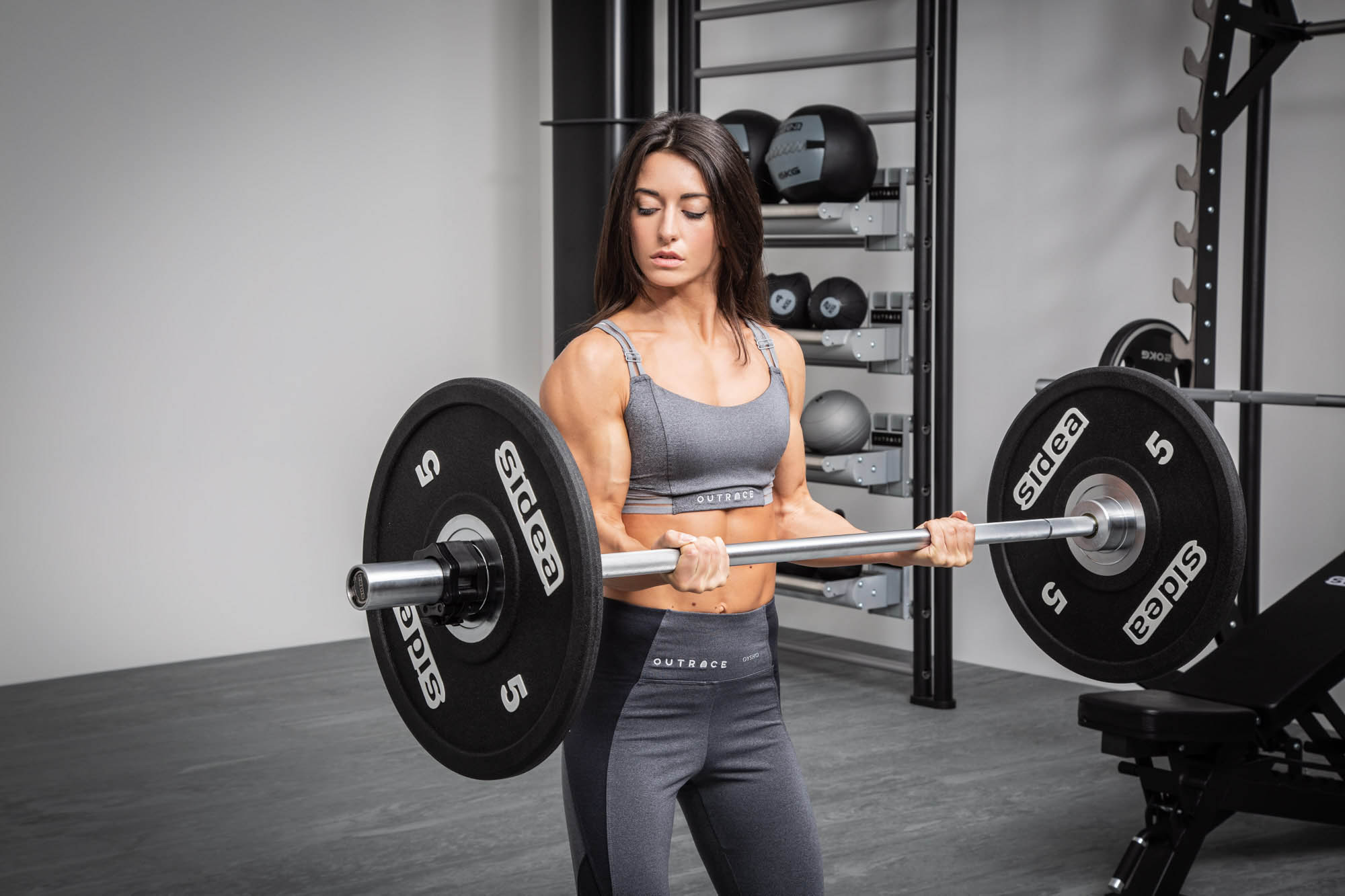
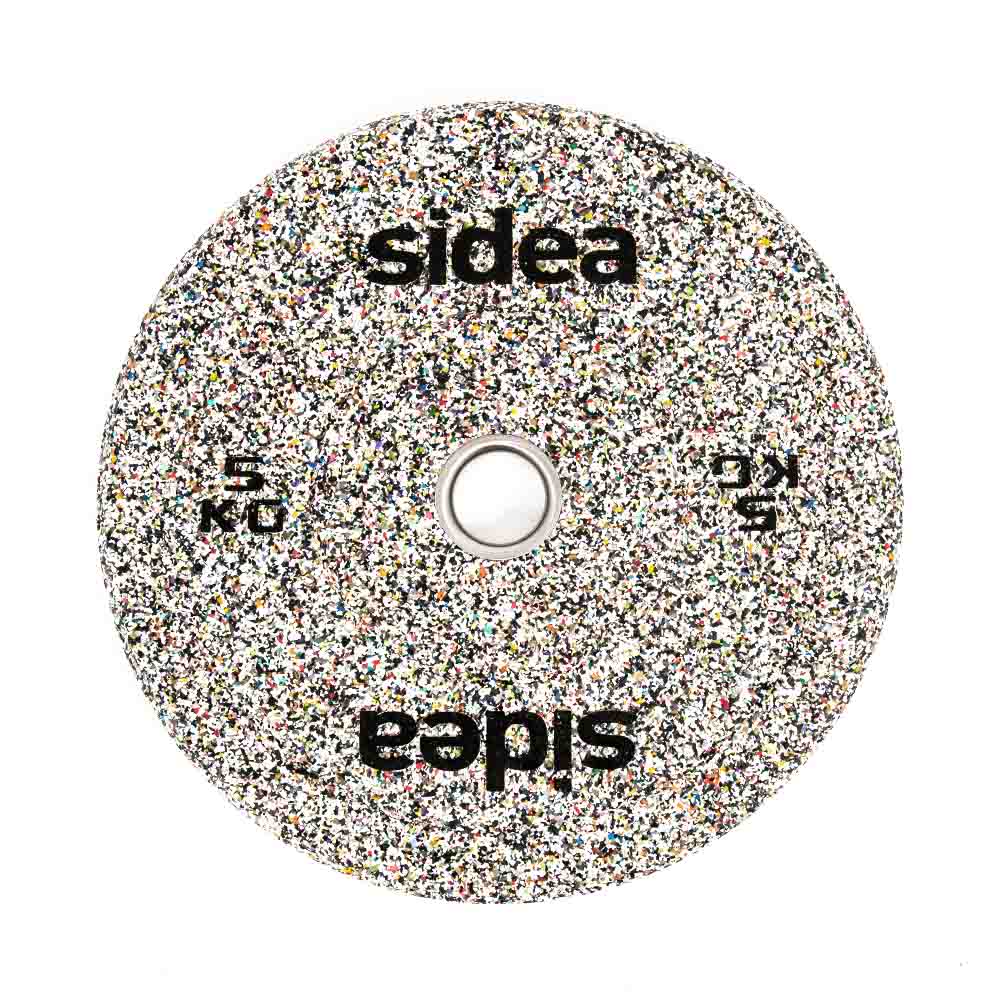
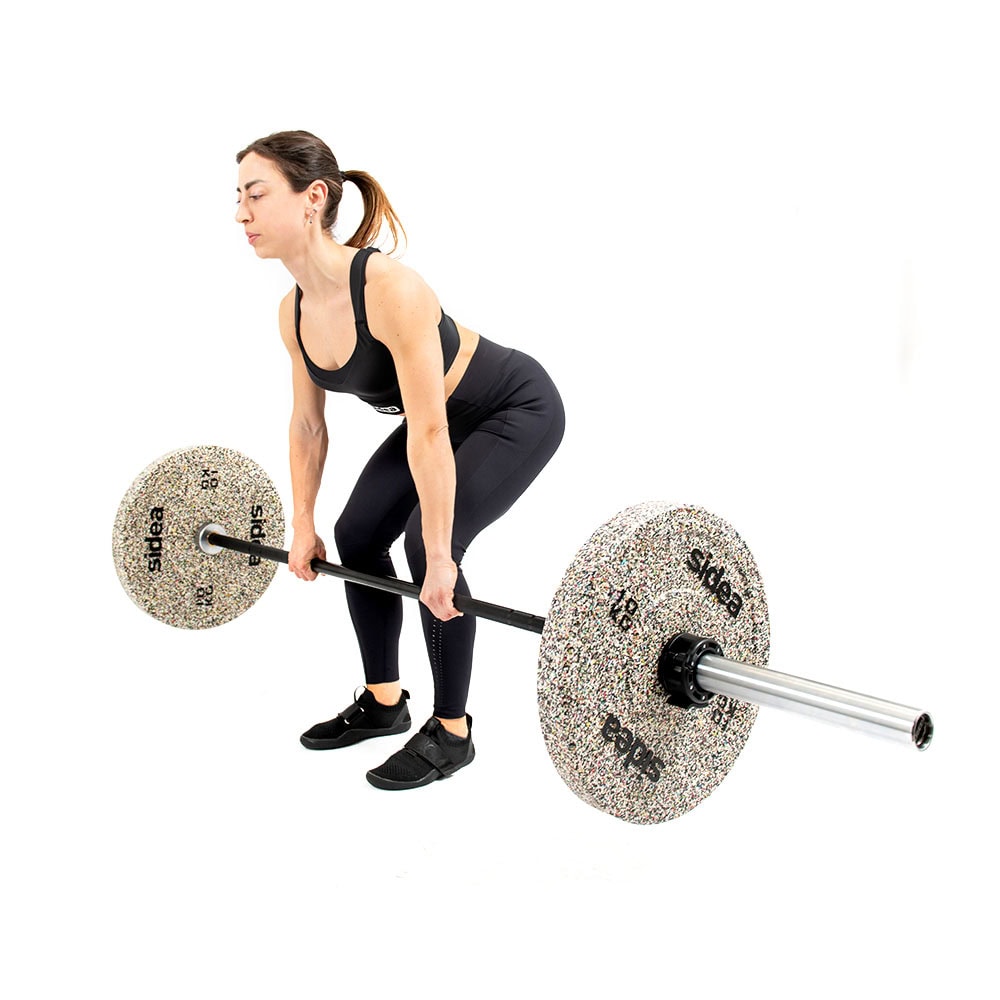
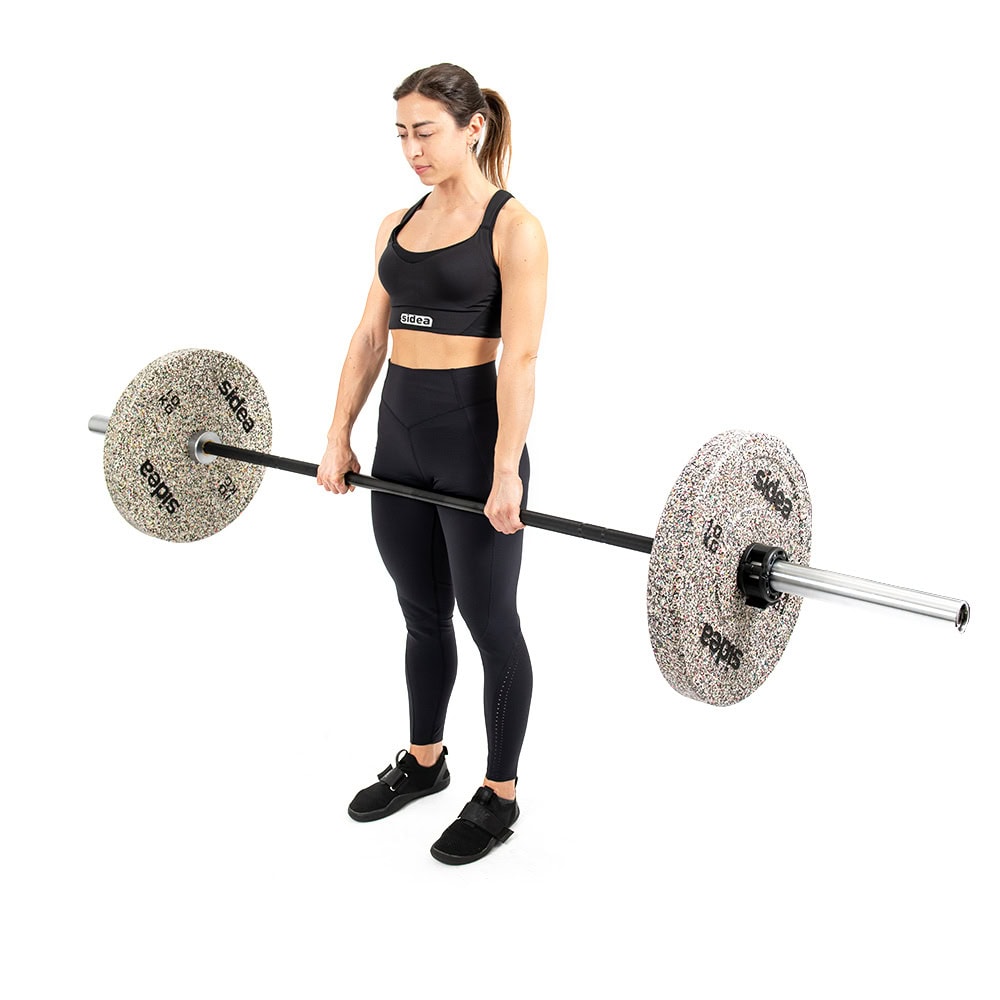
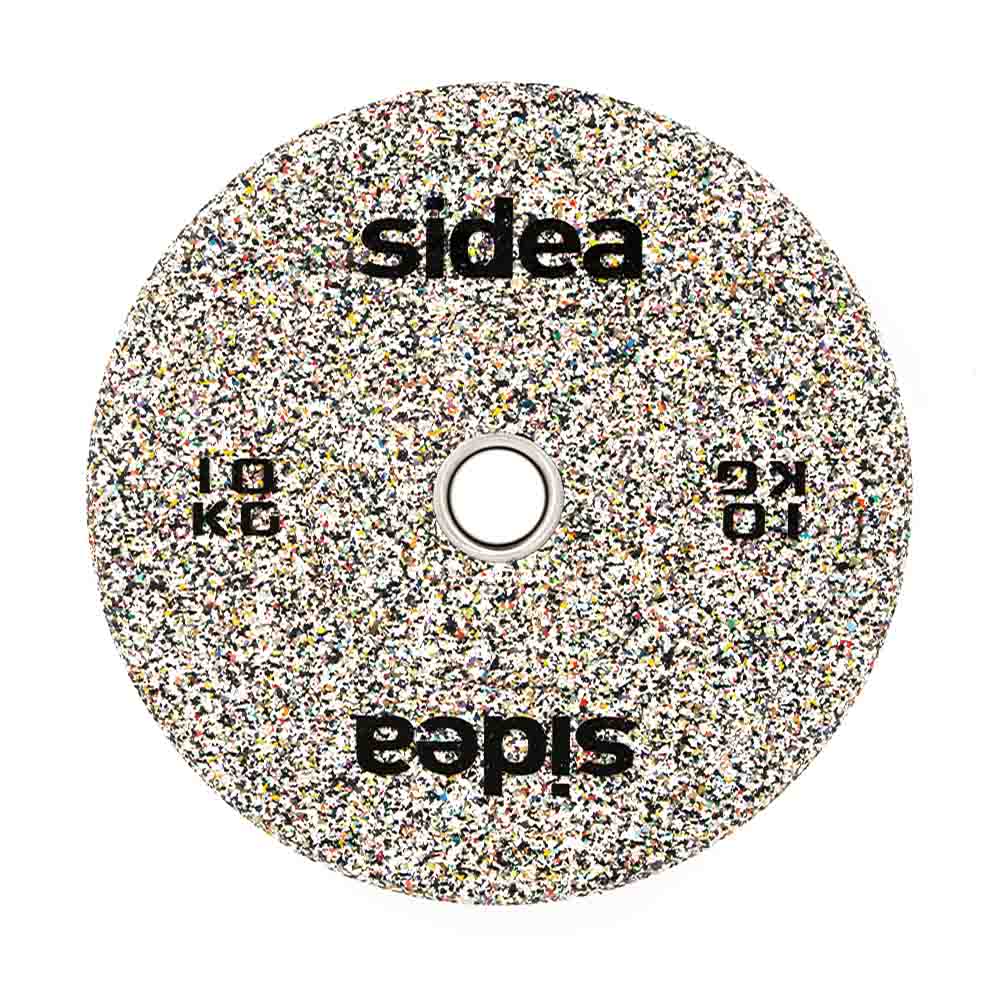
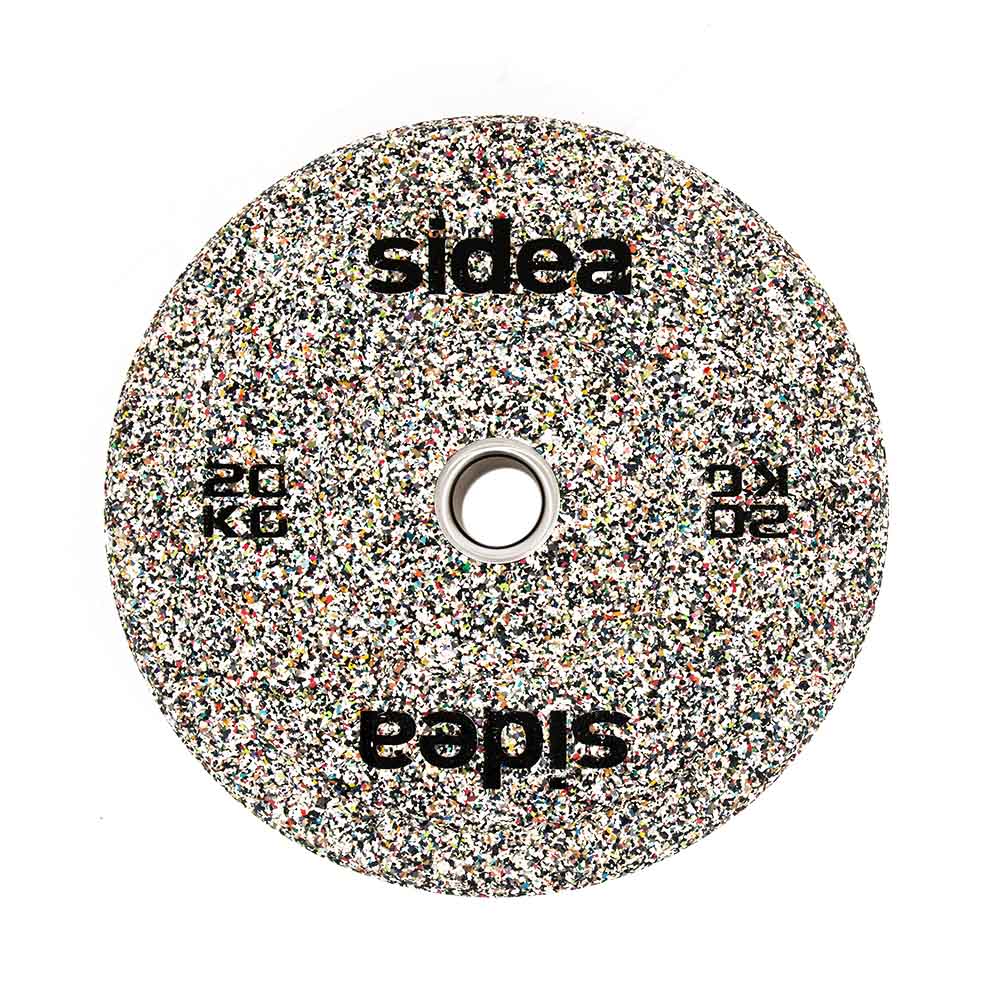
The plates in this line are entirely made from recycled rubber granules sourced from shoes. These are not bumper plates made with new vulcanized rubber merely coated with a layer of recycled granules, but plates fully composed of recycled rubber granules bonded together through high-temperature processing. For this reason, in order to achieve the target weight while maintaining the 450 mm diameter and an acceptable thickness, the 20 kg plate contains a small metal core inside.

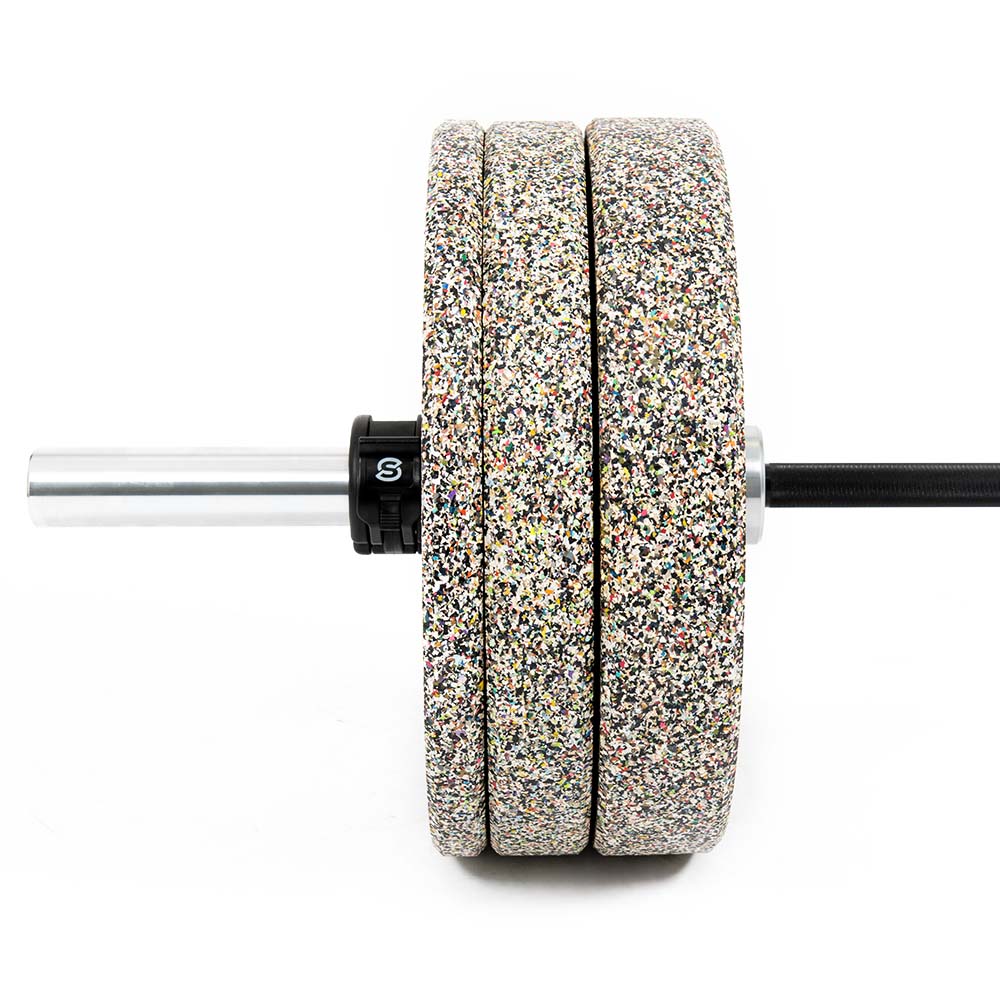
The use of recycled rubber granules gives these plates their distinctive stone-like appearance, with color tones that may vary depending on the production batch. Additionally, the light base color, which tends toward white, may take on yellowish shades over time due to oxidation from exposure to light and environmental factors.
Crumb bumpers, also known as Grid or Hi-Temp bumper plates, have been produced for over twenty years. However, the growing focus on material recycling and advancements in manufacturing techniques have led to a renewed interest in this type of plate, now offering higher quality compared to earlier versions.
From a technical standpoint, modern Crumb Plates should not be confused with old models that were overly thick and excessively bouncy. The rubber used—bonded with polyurethane—is about 10% softer than that of standard training bumper plates, offering greater elasticity, slightly more bounce, and a quieter impact on the ground. The result is a less sharp and harsh floor contact, making for a more pleasant experience without excessive rebound.
Note: In the final stage of production, the plates are treated with silicone-based products. The silicone layer can be wiped off with a cloth or will naturally wear off with use over time.
Inner hole diameter: 50 mm
Total plate diameter: 450 mm
Available weights:
Code 9040/7 – Bumper Plate 5 kg – Thickness: 32 mm
Code 9042/7 – Bumper Plate 10 kg – Thickness: 59 mm
Code 9044/7 – Bumper Plate 20 kg – Thickness: 76 mm
Weight/thickness tolerance: ± 3%.


